Guides
The Metrics That Matter in Audio Publishing Analytics
If a team adds audio to its content but never measures how the feature is used, it is hard to know whether the product is improving the experience or just adding visual complexity. Audio publishing analytics solve that problem. They help product and editorial teams understand what listeners actually do, which articles perform best in audio, and where the experience needs improvement.
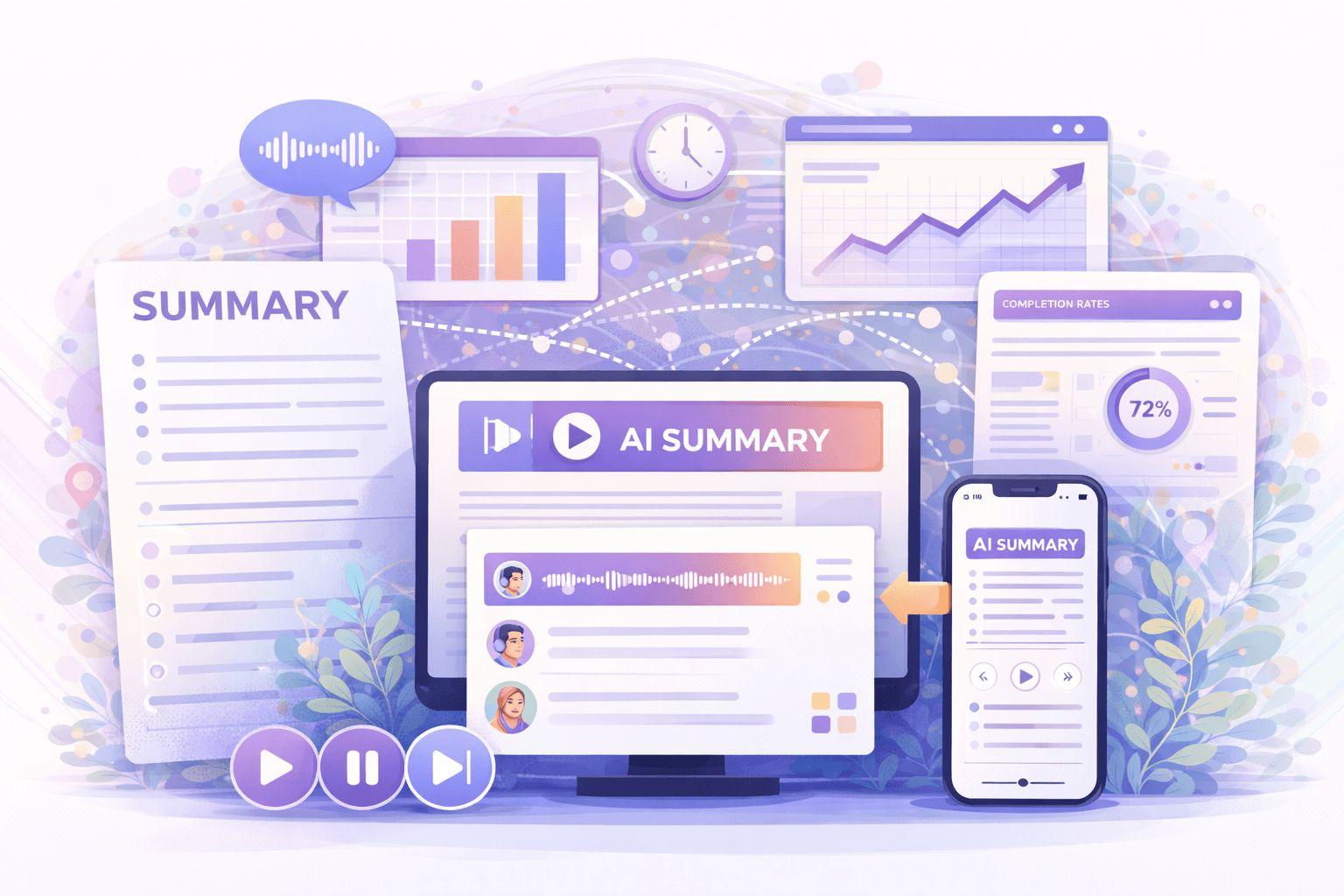
The most useful analytics are not vanity numbers. They are the ones that help teams make better publishing decisions.
Starts and completion tell different stories
Play starts are useful because they show feature discovery and initial interest. If few users start playback, the issue may be player placement, design, or article relevance. But starts alone are not enough. Completion rates show whether the listening experience holds attention after the first click.
A page with many starts but low completion may signal weak voice quality, article mismatch, or poor pacing. A page with fewer starts but high completion may point to strong audience fit. Looking at these metrics together is much more useful than treating either one in isolation.
Listening time shows depth of engagement
Average listening time is one of the best indicators of real value. It tells teams whether users are spending meaningful time with the audio version or just sampling it briefly. This can be especially useful when comparing long-form analysis, shorter news pieces, and evergreen educational articles.
When segmented by article type, listening time can reveal which formats deserve more audio investment. Some teams discover that explainers and long reads perform far better than short updates, while others see strong audio engagement on recurring briefings or newsletter-style content.
Article-level insights help editorial planning
Analytics become much more valuable when they are tied to individual articles. Editors can then compare plays, completion rates, and listening patterns across topics, sections, authors, or formats.
This creates useful feedback loops. If policy explainers attract high completion, that may justify more investment in that area. If research summaries are frequently played but rarely finished, the team may need better summaries or shorter audio introductions. Product data becomes editorially useful when it is connected to content decisions.
Use analytics to improve experience, not just report numbers
The goal of audio analytics is not to generate another dashboard that nobody acts on. It is to improve the product. That may mean changing player placement, testing voice defaults, adjusting page templates, or prioritising multilingual versions where engagement is strongest.
The best analytics programs combine product and editorial thinking. They ask not only what happened, but what should change because of it.
Conclusion
The metrics that matter in audio publishing are the ones that help teams understand discovery, attention, and content fit. Starts, completion, listening time, and article-level patterns all contribute to a better view of how audio performs.
When used properly, analytics turn article audio from a nice feature into a measurable publishing channel.