Publishing
Why Every Publisher Should Turn Articles Into Audio in 2026
Written content is still the foundation of most digital publishing, but the way people consume information has changed. Readers skim on the move, switch between devices, and often do not have the time or focus to sit with a long article from start to finish. Audio gives publishers a second way to deliver the same value without asking the audience to change its habits. A commuter can listen during a train journey. A busy founder can absorb an industry update while walking between meetings. A student can review a long article without being tied to a screen.
That shift is why article audio is no longer a novelty feature. It is becoming part of the modern publishing stack. When implemented well, it improves accessibility, extends time spent with content, and creates a more flexible user experience. It also helps publishers serve readers who prefer listening over reading, which is a much larger group than many teams assume.
Audio extends the value of every article
A strong article already contains the research, argument, and structure needed for a useful listening experience. Turning that same piece into audio means the editorial team gets more output from work it has already completed. Instead of publishing one asset, the team publishes two versions of the same idea: one for reading and one for listening.
This matters because distribution is fragmented. Some users arrive from search and want a fast answer. Others bookmark long reads for later but never come back. Audio helps reduce that drop off. An embedded player gives readers the option to start listening immediately, which can keep them engaged with the piece instead of losing them to a later intention that never turns into action.
Accessibility is not optional anymore
One of the strongest reasons to add article audio is accessibility. Audio can help users with visual impairments, reading difficulties, screen fatigue, and cognitive overload. It can also support people who simply process spoken information more comfortably than written text.
There is also a practical side to accessibility. When content is easier to consume, it becomes useful in more situations. That matters for public interest journalism, educational content, policy analysis, and research-led publishing. The easier it is for people to access an article in the format that suits them, the more likely they are to engage with it fully.
Engagement improves when readers have choice
Audio does not replace text. It improves the experience around text. Readers may start by scanning the summary, continue with the player, and then return to the written version for details or quotes. That layered experience is far more useful than forcing everyone into a single consumption path.
For publishers, that creates an opportunity to improve time on page, repeat visits, and loyalty. It also creates richer product signals. If a team can measure which articles are listened to, how long users stay engaged, and where playback drops off, editorial decisions become more informed over time.
What a good article audio experience looks like
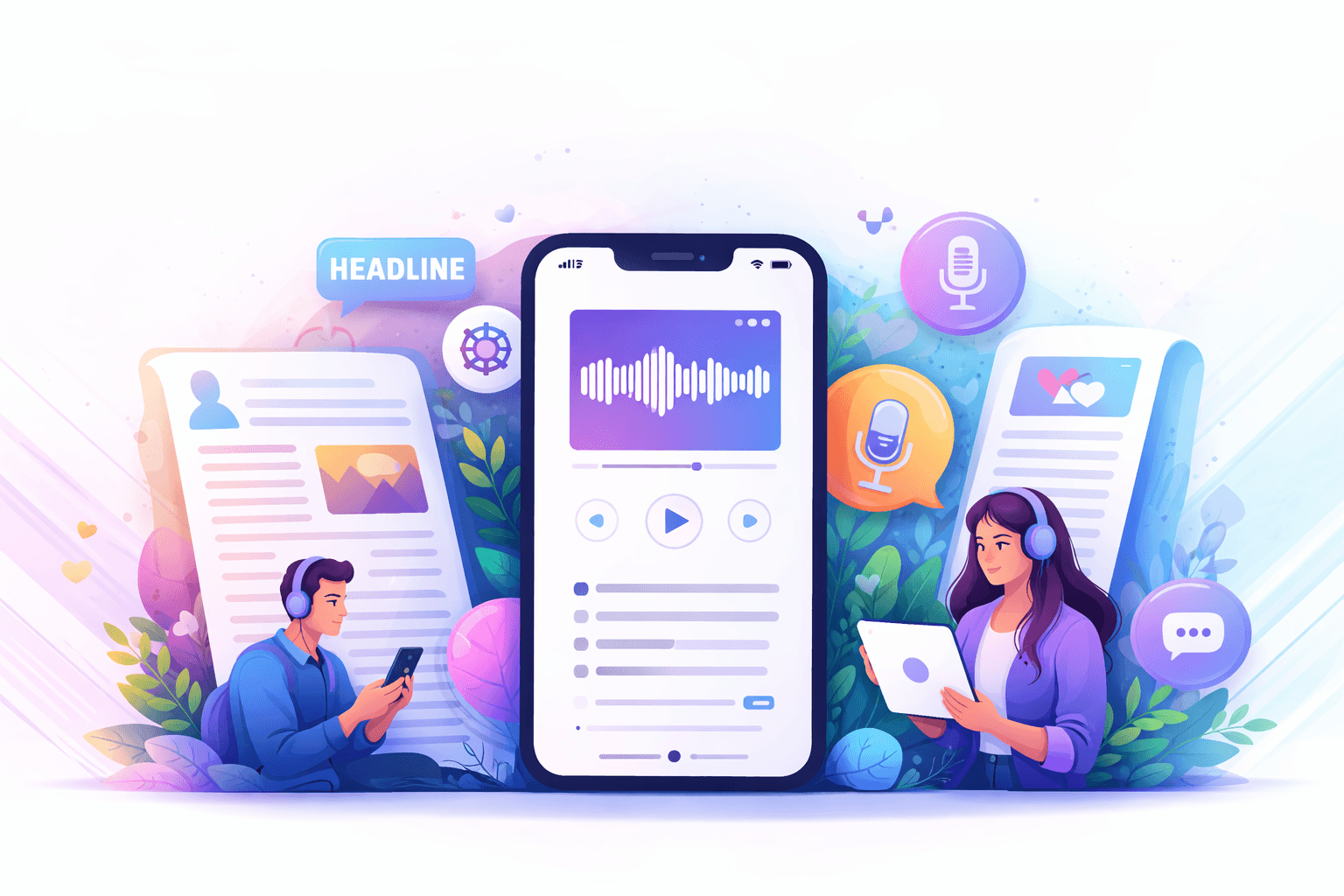
Adding a play button is not enough. A strong article audio experience needs a clean player, natural-sounding voices, sensible playback controls, and a workflow that fits publishing teams. The best setups also support transcripts, summaries, multilingual delivery, and analytics.
The user experience should feel native to the article page. Readers should not feel like they have been pushed into a separate product. The audio player should look calm, editorial, and trustworthy. Fast generation and consistent voice quality matter because the goal is not just to create speech, but to create something readers will actually want to use.
Conclusion
In 2026, turning articles into audio is one of the clearest upgrades a publisher can make. It improves access, supports engagement, and helps content perform in more real-world situations. More importantly, it allows a single article to do more work without requiring the editorial team to rebuild its workflow from scratch.
Publishers that treat audio as part of the article experience, rather than an afterthought, will be better placed to meet audience expectations as content consumption keeps shifting toward more flexible, screen-light formats.