Accessibility
Why Research Papers Need Better Audio Accessibility
Research papers are valuable, but they are rarely easy to consume. They are long, dense, and often written for precision rather than flow. For many people, that makes them difficult to approach even when the subject is relevant. Audio cannot remove the complexity of research, but it can lower the barrier to entry.
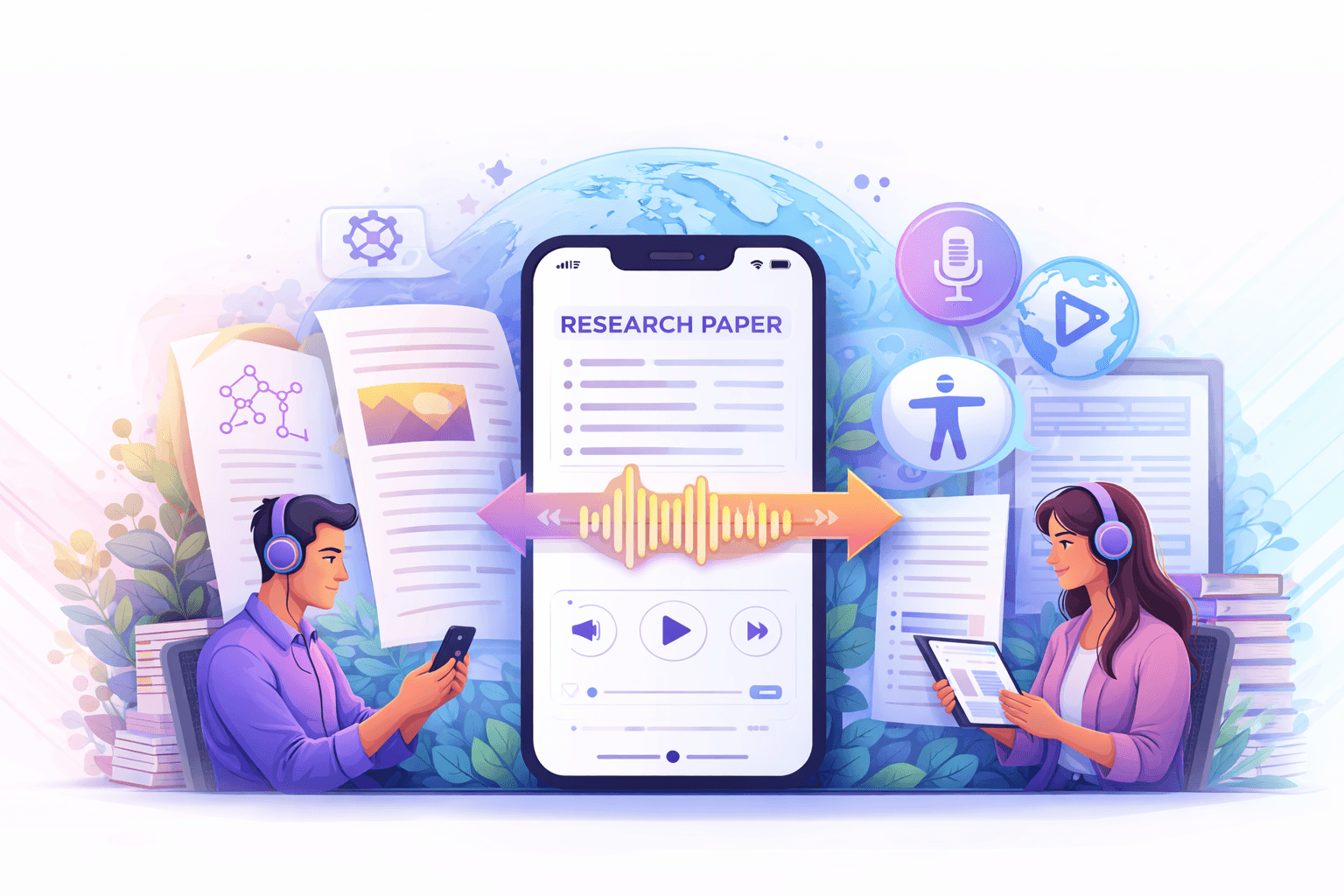
A high quality audio version gives readers another way to engage with the material. That matters for academics, students, policy teams, clinicians, journalists, and professionals who want to stay current but do not always have the time or visual energy to read every paper on screen.
Audio helps with first-pass understanding
Many research papers contain a clear abstract, structured sections, and well-defined arguments. That makes them suitable for a first-pass listening experience. A user may listen to the introduction, methods overview, discussion, or conclusion before deciding which parts deserve closer study in the written version.
This is especially useful for literature review workflows. Instead of opening ten PDFs and skimming them all visually, a researcher can listen to selected papers while moving through other tasks. Audio does not replace close reading, but it helps users identify which papers need deeper attention.
Accessibility matters in academic and professional settings
Audio accessibility is often discussed in the context of websites and public content, but it is just as relevant for research publishing. Users may have visual impairments, dyslexia, attention limitations, or simple screen fatigue. Long-form academic reading places a heavy cognitive load on many people, particularly when the material is technical.
Providing an audio option creates a more inclusive way to engage with knowledge. It also supports flexible study habits. A postgraduate student may listen to a paper summary before a seminar. A policy researcher may revisit a section while commuting. A clinician may absorb findings between appointments. These are practical use cases, not edge cases.
Summaries and transcripts make audio more useful
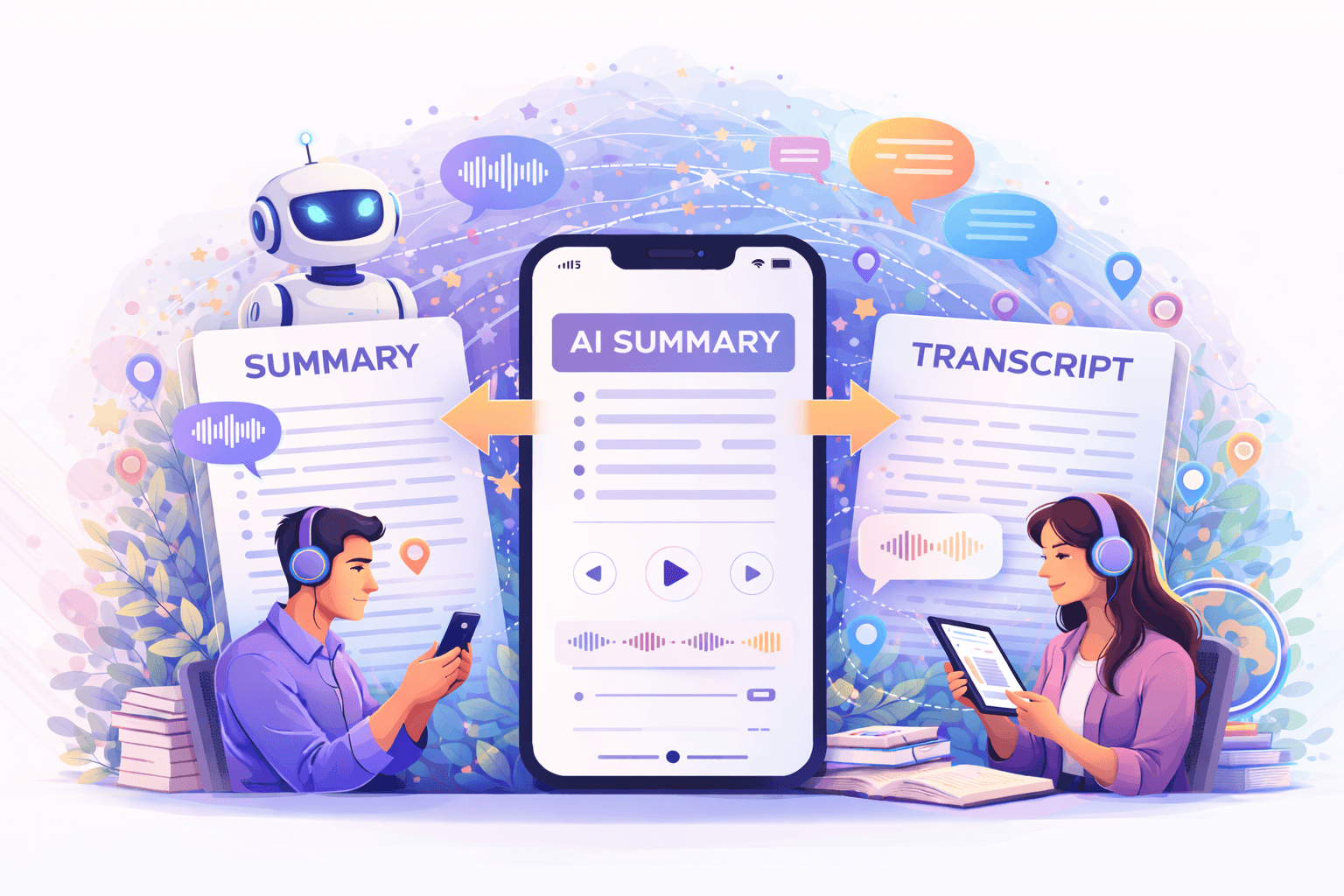
Complex content benefits from support layers. A concise AI summary can help a listener understand the paper’s purpose before pressing play. A transcript lets the user jump back to key points, verify terminology, or search for a detail later. Together, these features turn audio into part of a broader comprehension workflow.
For research content, that matters because precision is critical. Users need ways to cross-check what they have heard. A strong platform should therefore combine audio with transparent text support rather than pretending speech alone is enough for every type of material.
Multilingual access expands the reach of research
Research is global, but language can still limit access. Translating or voicing summaries and key sections in other languages can help institutions share findings with broader audiences. That is useful in public health, education, policy, and international collaboration contexts.
Even when the full paper remains in English, multilingual summaries and audio intros can make the core ideas far more discoverable. This is particularly valuable for teams that want to communicate outside specialist academic circles.
Conclusion
Research papers need better audio accessibility because important knowledge should not be locked behind one format. Audio, summaries, transcripts, and multilingual support can make complex material more approachable without reducing its rigour.
The aim is not to simplify research into something it is not. The aim is to make it easier for more people to begin engaging with it, return to it, and use it in real-world settings.