AI Audio
Why AI Summaries and Transcripts Make Article Audio More Useful
Audio is powerful because it gives readers another way to consume written content, but speech alone is not always enough. Some users want the quickest possible understanding of an article before committing several minutes to playback. Others want a written reference point while listening. That is where AI summaries and transcripts become essential.
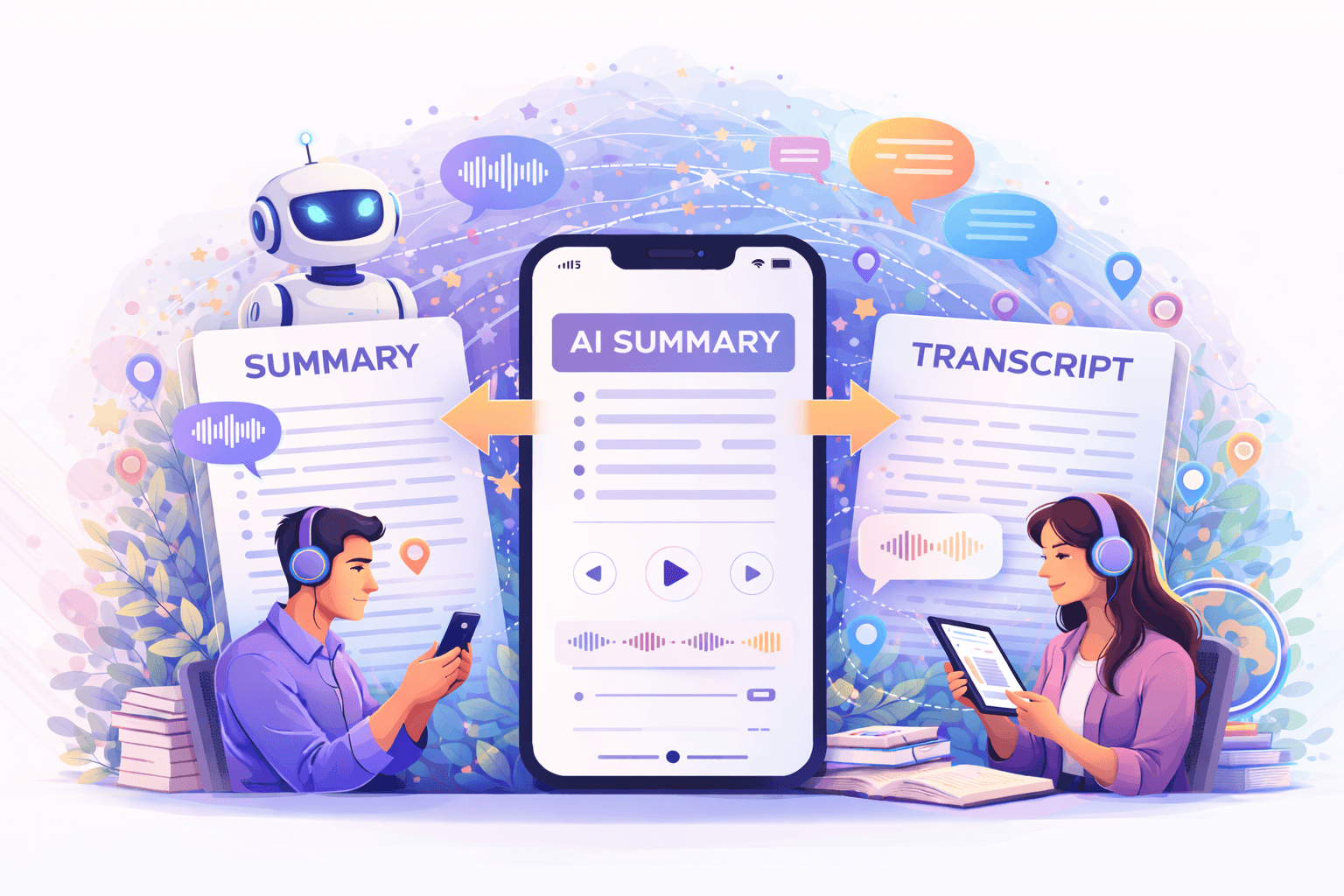
Together, they turn article audio from a single format feature into a richer content experience. Instead of asking users to choose between reading and listening, they let people move between both depending on what they need in the moment.
Summaries reduce friction at the top of the page
A concise summary helps the user understand whether an article is worth their time. This is useful for long reads, technical writing, and industry analysis, where the subject may be relevant but the audience still wants a fast orientation before going deeper.
When placed near the player, the summary acts as a decision aid. It tells the user what the article covers, why it matters, and what they can expect from the listening experience. That small layer of context can make the difference between a skipped feature and an engaged session.
Transcripts improve trust and usability
A transcript gives users a written path back into the content. They can scan, copy, reference, or verify details without replaying the entire audio. This is especially valuable for technical terms, names, statistics, or quoted material.
Transcripts also support accessibility. Some people prefer to read along while listening. Others want to switch between text and speech depending on their environment. A transcript creates that flexibility and makes the audio feature more useful across more situations.
The best experience combines all three layers
A strong article page can offer three connected layers: the full written article, a short AI summary, and a structured audio experience with transcript support. That combination gives the user real choice.
Someone in a hurry may read the summary and leave with the main point. Someone multitasking may listen to the article during a walk. Someone researching may use the transcript to pull out exact phrasing. Each behaviour is valid. The role of the product is to support all of them without making the page feel fragmented.
Editorial teams gain useful signals too
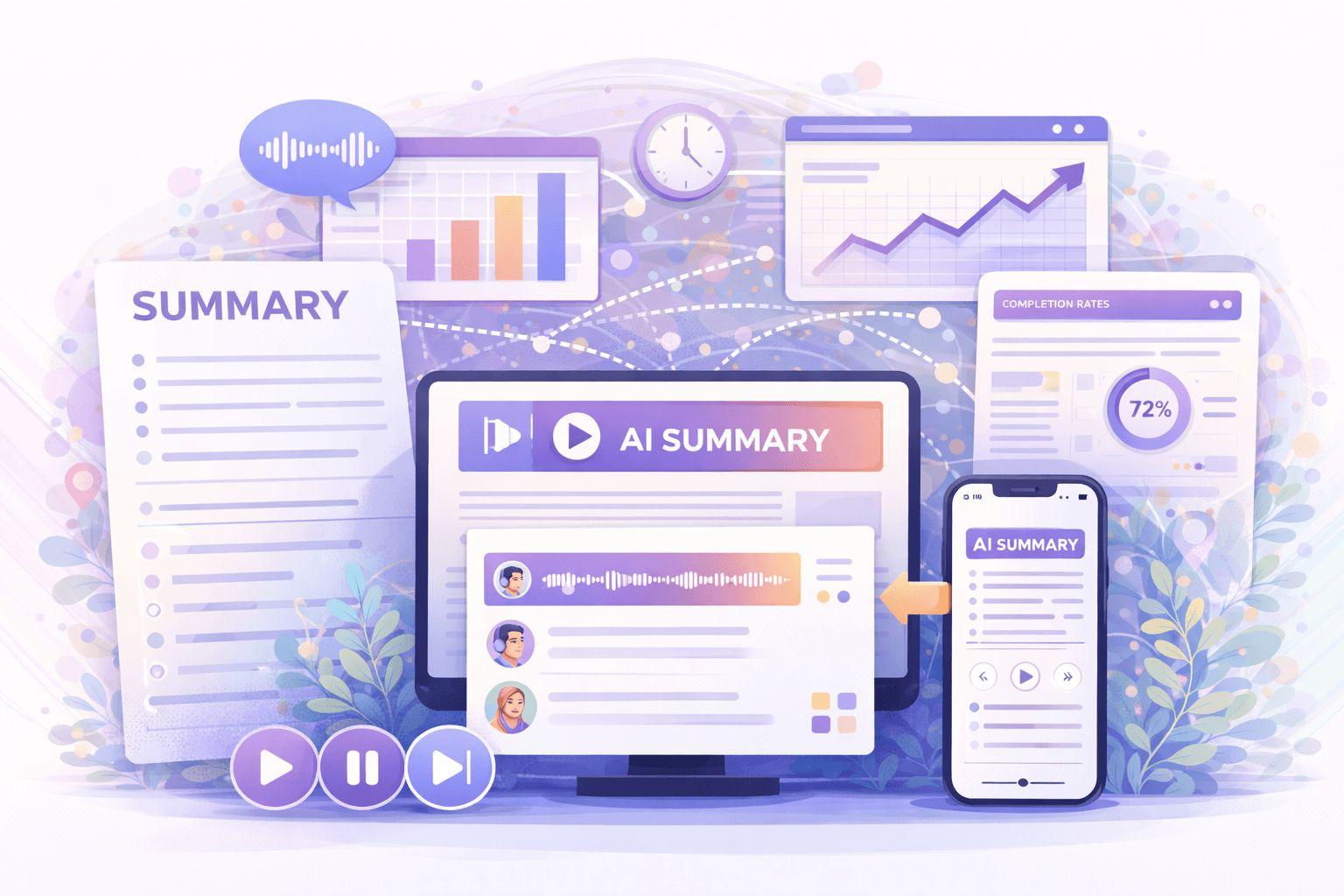
Summaries and transcripts are not just user features. They can also help editorial teams understand how content is being consumed. If readers engage heavily with summaries but rarely start playback, the issue may be the article length, voice selection, or page placement of the player. If transcript use is high, the content may be especially research heavy or detail driven.
These are useful product signals. They can guide layout changes, editorial strategy, and feature prioritisation across the platform.
Conclusion
AI summaries and transcripts make article audio more useful because they reduce friction, improve clarity, and support different patterns of attention. They are not extras added after playback. They are part of what makes audio publishing genuinely practical.
For teams building a content-to-audio experience, these features help transform a simple player into a more complete and accessible publishing layer.